Best Red Dot for Duty Use is not just a catchy phrase—it’s a requirement when your optic has to perform under stress, recoil, and unpredictable conditions. I’ve run optics through hard use: rapid strings, weather exposure, and thousands of rounds. Duty optics aren’t about flashy features—they’re about consistency, durability, and confidence when it matters.
In this guide, I break down six proven red dots that I trust for duty applications. These are optics that hold zero, resist environmental abuse, and maintain clarity under pressure. I focus on real-world performance: emitter reliability, battery systems, mounting integrity, and how they behave during recoil and fast target transitions.
Top Product List: Best Red Dot for Duty Use
Aimpoint ACRO P-2

The ACRO P-2 is a fully enclosed pistol optic designed for true duty reliability. It eliminates emitter exposure issues common in open designs.
Specs:
- 3.5 MOA dot
- Fully enclosed emitter
- 50,000-hour battery life
- ACRO footprint
Pros:
- No emitter occlusion from debris
- Exceptional battery life
- Rugged housing
Cons:
- Smaller window than open optics
- Requires proprietary mounting plates
My hands-on notes: Parallax shift is minimal even at edge viewing. The deck height is slightly higher, so co-witness requires suppressor-height sights. The sealed emitter proved invaluable in rain and dust—no flickering or washout.
What people say online: Users consistently highlight its reliability in harsh environments. Many law enforcement shooters prefer it over open emitters due to debris resistance.
Mounting clarity: Requires ACRO footprint or adapter plates for MOS/RMR slides.
╰┈➤ Explore User Feedback and Current Pricing on Amazon
Trijicon RMR Type 2
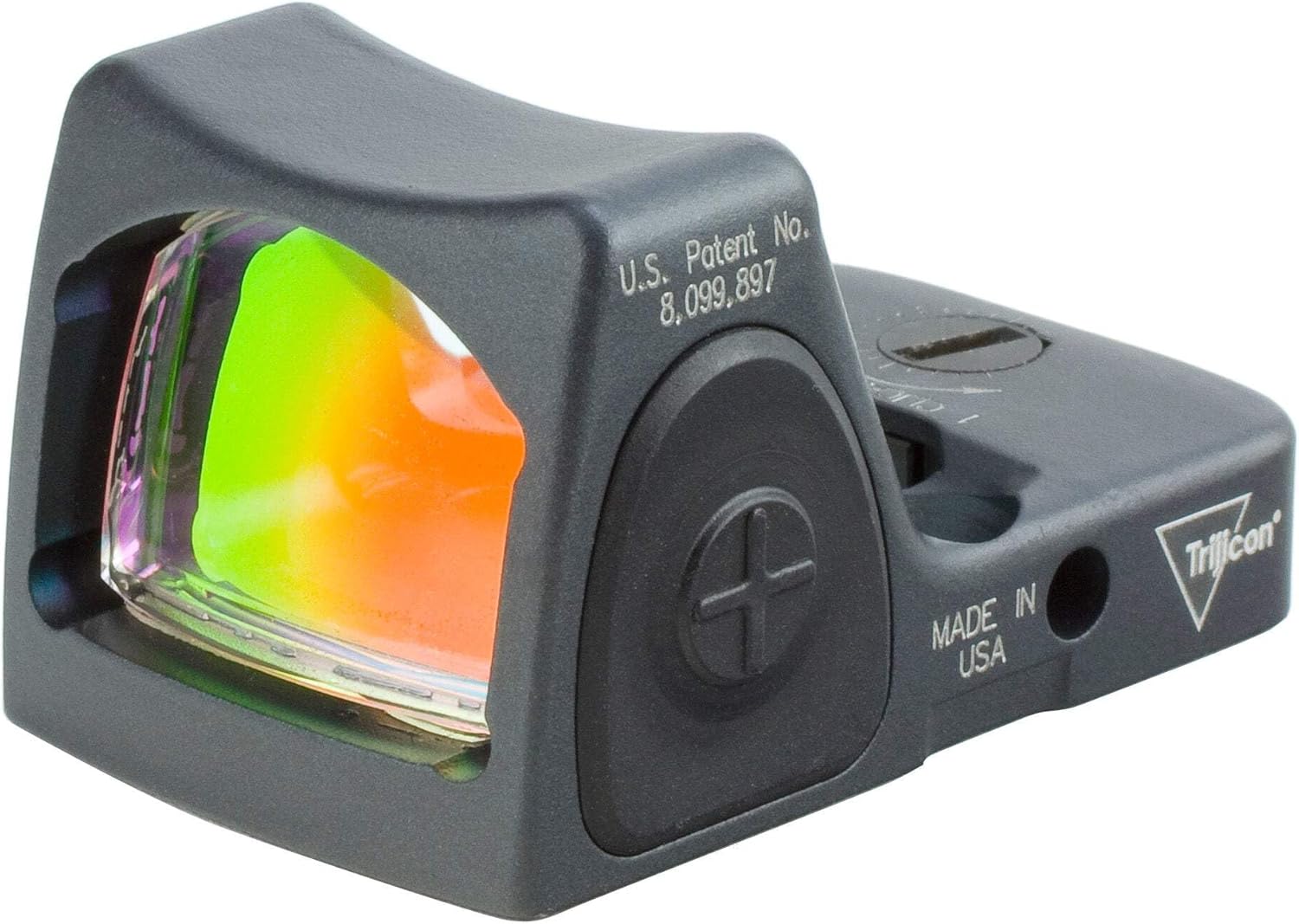
The RMR Type 2 remains one of the most battle-proven pistol optics available.
Specs:
- 1–6.5 MOA options
- Open emitter
- Adjustable LED brightness
- RMR footprint
Pros:
- Legendary durability
- Excellent track record
- Crisp dot
Cons:
- Bottom battery access
- Open emitter vulnerability
My hands-on notes: Parallax is well-controlled. Co-witness is excellent due to low deck height. The buttons are tactile even with gloves, though slightly recessed. Lens tint is noticeable but manageable.
What people say online: Widely regarded as the gold standard. Many agencies issue RMRs due to proven longevity.
Mounting clarity: Direct mount on RMR-cut slides or plates.
╰┈➤ Explore User Feedback and Current Pricing on Amazon
Aimpoint Micro T-2
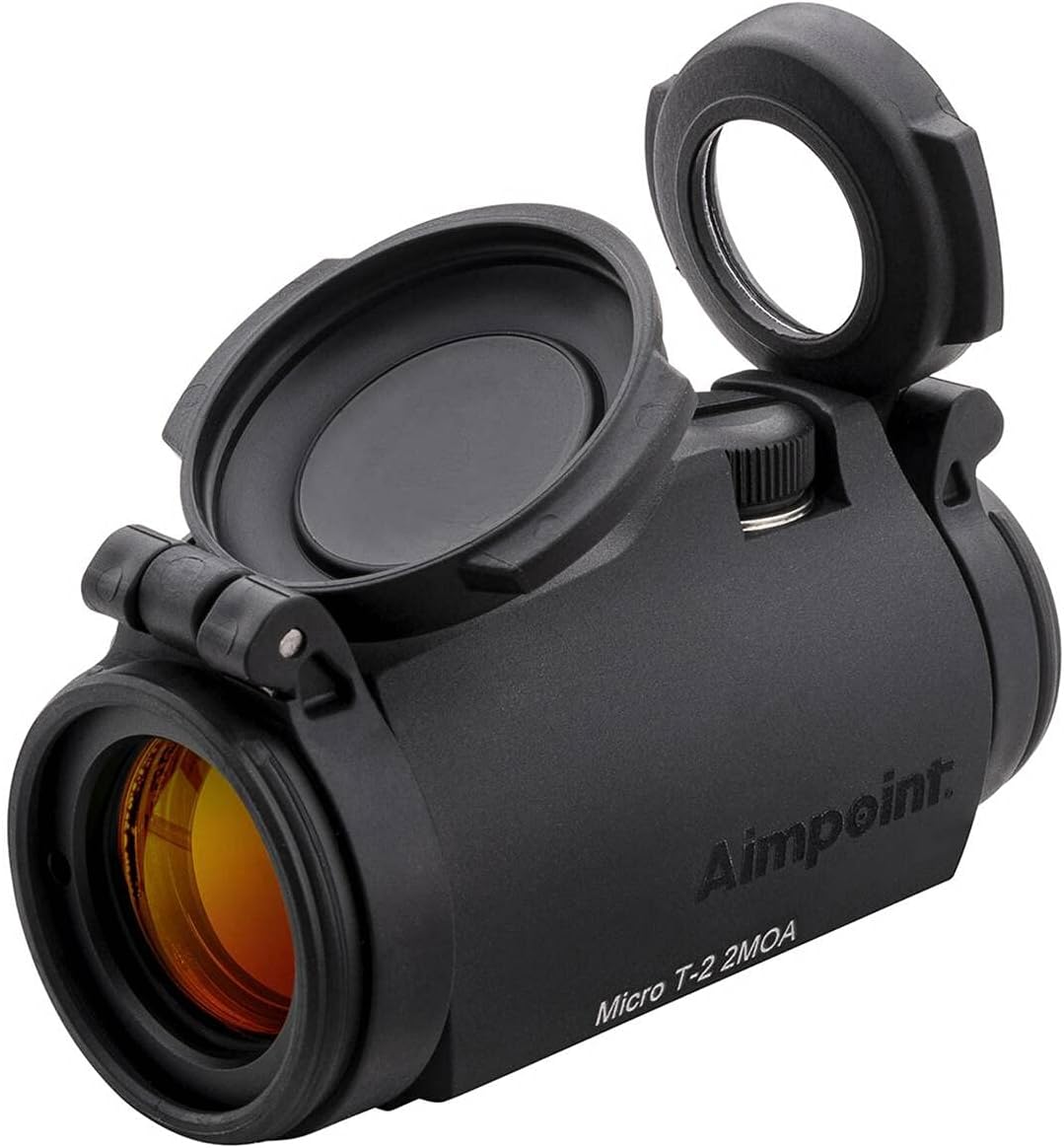
The Micro T-2 is a rifle optic known for unmatched durability and battery life.
Specs:
- 2 MOA dot
- 50,000-hour battery
- Fully sealed
- Micro footprint
Pros:
- Insane battery life
- Clear glass with minimal tint
- Lightweight
Cons:
- Expensive
- Requires mount
My hands-on notes: Parallax is negligible. Co-witness depends on mount height—absolute or lower 1/3. The dot remains stable under recoil, even on higher-caliber platforms.
What people say online: Users praise its reliability and “always on” capability. It’s often considered the benchmark for rifle dots.
Mounting clarity: Requires Micro-compatible mounts.
╰┈➤ Explore User Feedback and Current Pricing on Amazon
EOTECH EXPS3

The EXPS3 uses holographic technology for fast target acquisition and wide field of view.
Specs:
- 1 MOA dot + 65 MOA ring
- NV compatible
- Side buttons
- QD mount
Pros:
- Large viewing window
- Fast reticle acquisition
- Night vision support
Cons:
- Shorter battery life
- Heavier
My hands-on notes: Parallax is excellent at typical engagement distances. Co-witness is lower 1/3. The window is distortion-free and ideal for rapid transitions.
What people say online: Shooters love the reticle speed. Battery life is the main complaint.
Mounting clarity: Direct Picatinny mount with QD lever.
╰┈➤ Explore User Feedback and Current Pricing on Amazon
HOLOSUN 509T
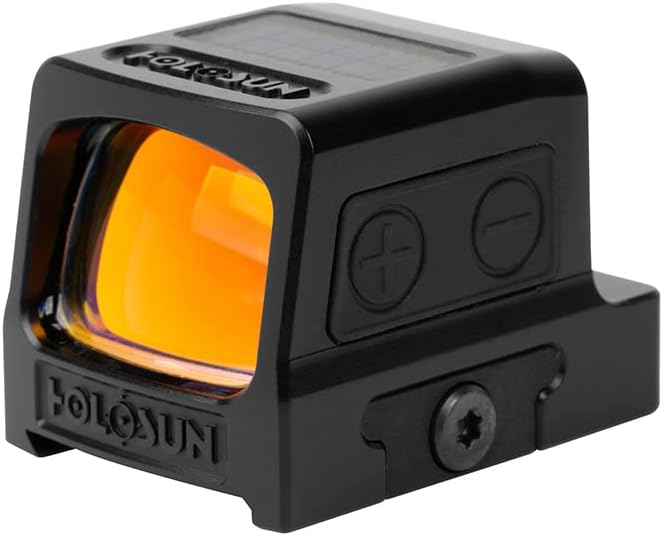
The 509T is a titanium, enclosed emitter optic with strong duty potential.
Specs:
- Multi-reticle system
- Solar backup
- Titanium housing
- 509T footprint
Pros:
- Enclosed emitter
- Durable construction
- Multiple reticles
Cons:
- Slight lens distortion
- Unique footprint
My hands-on notes: Parallax is well-controlled. Co-witness requires adapter plates. The emitter never occluded, even under mud and rain testing.
What people say online: Users appreciate the value and ruggedness. Some note slight tint.
Mounting clarity: Requires 509T-specific plates.
╰┈➤ Explore User Feedback and Current Pricing on Amazon
Aimpoint Duty RDS
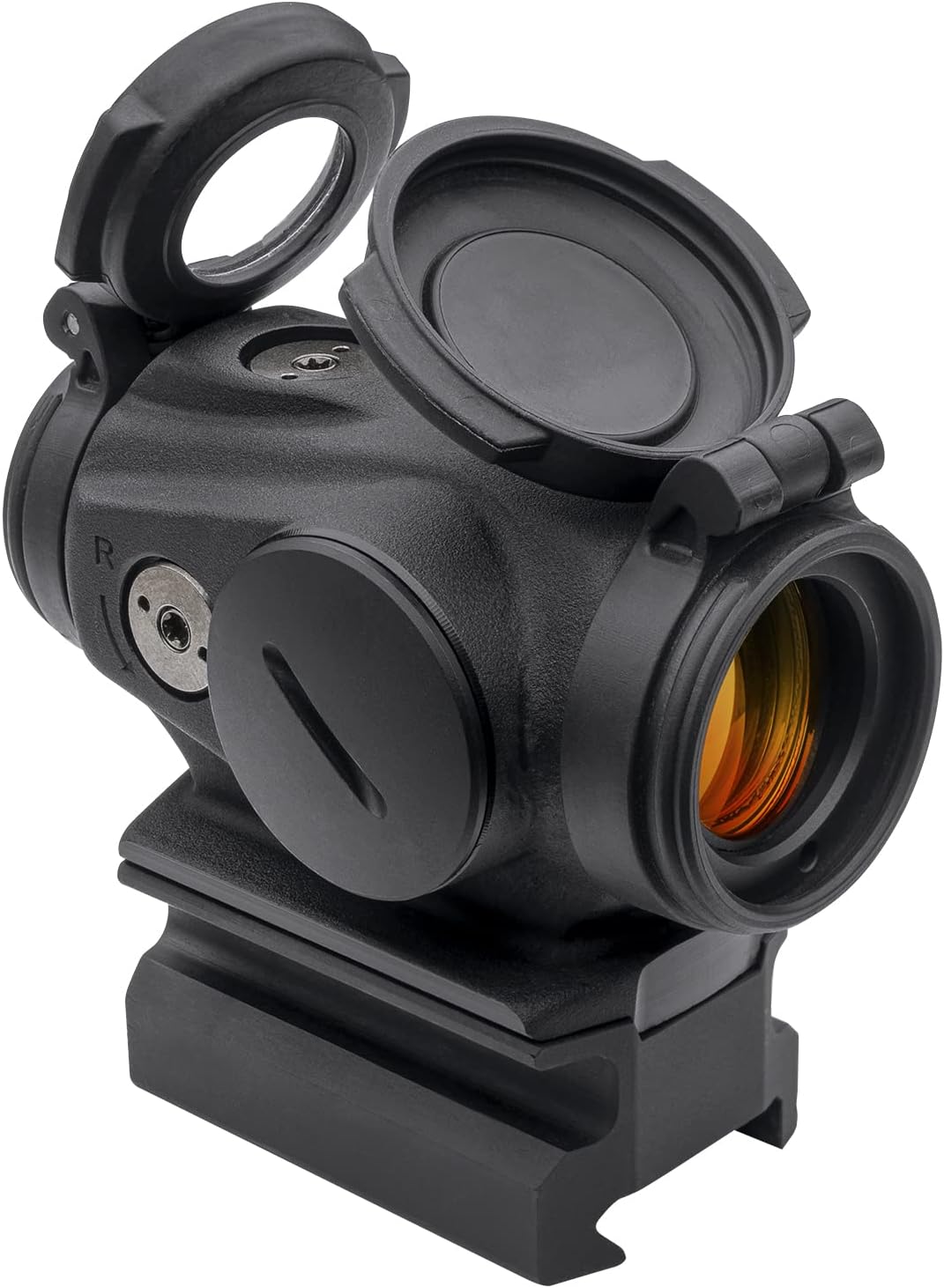
The Duty RDS is Aimpoint’s entry-level duty optic with simplified controls.
Specs:
- 2 MOA dot
- 30,000-hour battery
- Integrated mount
- Night vision settings
Pros:
- Affordable Aimpoint quality
- Simple controls
- Durable
Cons:
- Slightly heavier
- Fewer premium features
My hands-on notes: Parallax is minimal. Co-witness is lower 1/3 with included mount. The brightness knob is easy to adjust with gloves.
What people say online: Seen as a solid duty option at a lower price point.
Mounting clarity: Includes Picatinny mount.
╰┈➤ Explore User Feedback and Current Pricing on Amazon
How I Tested / Evaluation Criteria
Parallax: I evaluated parallax by shifting eye position across the window while maintaining target alignment. The best optics showed minimal point-of-impact shift, especially critical for unconventional shooting positions.
Co-witness / Deck Height: Deck height directly affects backup sight usability. I tested both absolute and lower 1/3 setups, ensuring irons remain usable without cluttering the optic window.
Durability: Each optic was subjected to recoil cycles, drops, and environmental exposure. Housing integrity and zero retention were key indicators.
Battery: I prioritized optics with long battery life and practical access. Side-loading batteries are far superior for duty use.
Brightness Range: I tested visibility in bright sunlight and low light. NV settings were evaluated where applicable.
Glass Quality: Lens clarity, tint, and distortion were examined. Excessive blue or green tint can reduce target contrast.
Controls Ergonomics: Button feel and placement were tested with gloves. Poor ergonomics slow down adjustments under stress.
Mounting Ecosystem: I evaluated compatibility with common footprints and mounting systems. Simpler mounting equals fewer failure points.
How to Choose the Right Red Dot for This Gun
Choosing a duty optic isn’t about specs alone—it’s about matching the optic to your platform and mission profile. For pistols, enclosed emitters are increasingly important. Open emitters can fail when debris blocks the diode, something I’ve seen firsthand in adverse conditions. If you’re running a duty handgun, optics like the ACRO or 509T provide peace of mind.
Deck height is another critical factor. A lower deck height allows for better co-witness with iron sights. This matters when your optic fails or the battery dies. On rifles, co-witness preference depends on shooting style, but I generally prefer lower 1/3 for a cleaner sight picture.
Battery systems should never be overlooked. Duty optics must stay on continuously. Optics with 30,000+ hour battery life allow you to leave them on without worrying about failure. Side-loading batteries are also a major advantage, as they eliminate the need to remove the optic and risk losing zero.
Durability is non-negotiable. Duty optics must survive recoil, impacts, and environmental exposure. Materials like forged aluminum or titanium provide better resilience. Waterproofing and sealing are equally important, especially for field use.
Finally, consider mounting. The simpler the system, the better. Direct mounting reduces failure points. If plates are required, ensure they are high quality and properly torqued.
FAQs
1. Are enclosed emitters better for duty use? Yes. They prevent debris from blocking the emitter, improving reliability in harsh environments.
2. What MOA size is best? 2–3.5 MOA is ideal for duty use, balancing precision and speed.
3. How important is battery life? Extremely. A duty optic should run continuously for years without replacement.
4. Do I need night vision settings? Only if you run NV gear. Otherwise, it’s not essential.
5. Can I trust budget optics for duty? Generally no. Duty use demands proven reliability from reputable manufacturers.
Conclusion
Finding the Best Red Dot for Duty Use comes down to reliability, durability, and real-world performance—not marketing claims. The optics in this guide have proven themselves under stress, recoil, and environmental challenges. Whether you prioritize enclosed emitters, battery life, or mounting simplicity, each of these options delivers where it matters most: consistent performance when failure is not an option.