The Best Red Dot for Dpms Oracle is not just about picking a popular optic—it’s about finding the right balance of durability, mounting compatibility, optical clarity, and real-world performance on a budget-friendly AR platform. The DPMS Oracle is a straightforward, no-frills rifle, which means your optic choice plays a huge role in how well it performs.
I’ve spent extensive time running red dots on AR-15 platforms similar to the Oracle, focusing on practical shooting, zero retention, and long-term reliability. In this guide, I break down six proven optics that actually complement the Oracle’s strengths rather than overwhelm it with unnecessary complexity.
Top Product List: Best Red Dot for Dpms Oracle
Sig Sauer Romeo5
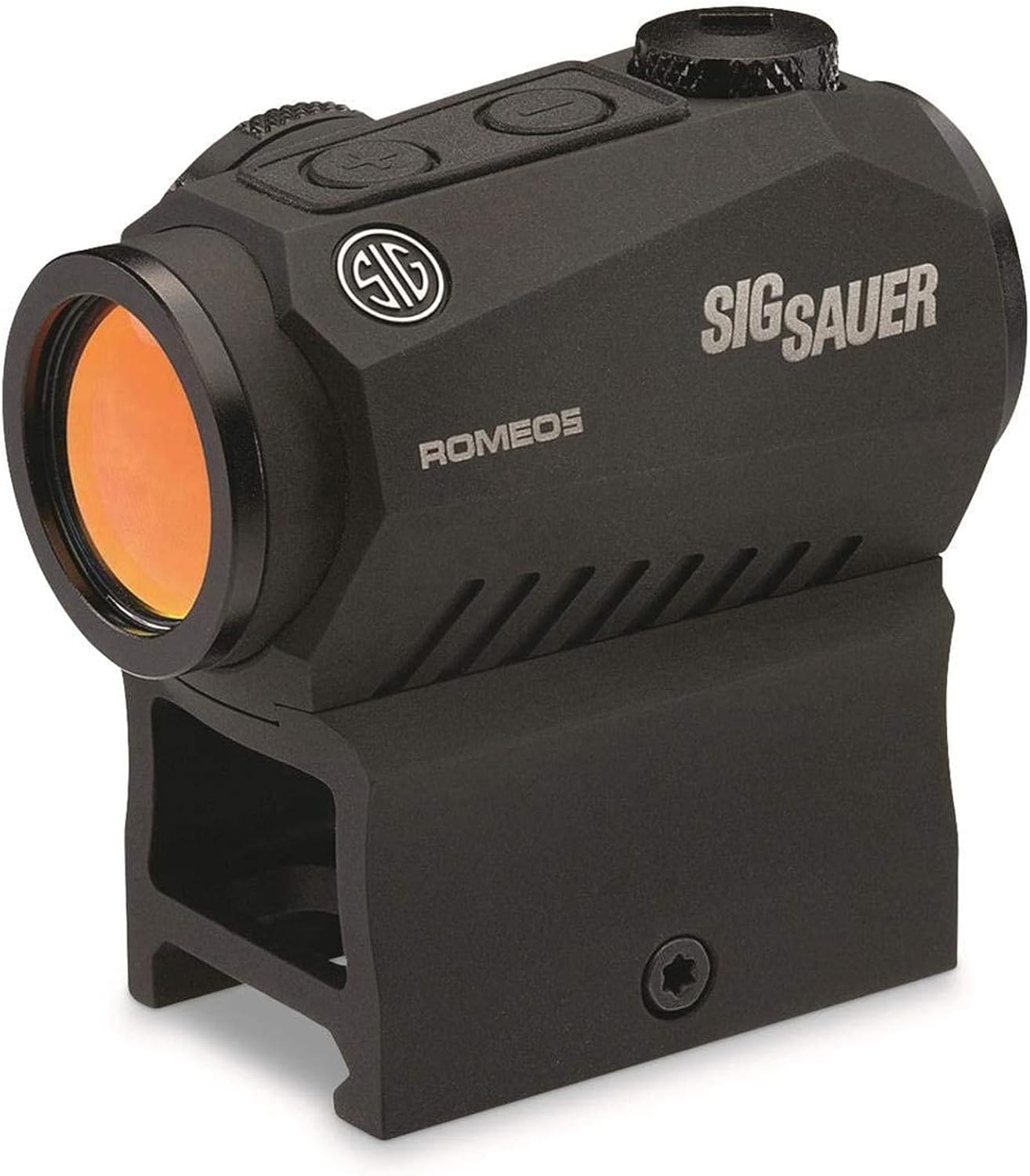
A compact, budget-friendly micro red dot that consistently overdelivers for AR-15 shooters. It’s one of the easiest optics to recommend for a DPMS Oracle build.
Specs:
- 2 MOA dot
- Motion-activated illumination (MOTAC)
- CR2032 battery (50,000 hours)
- IPX-7 waterproof
- Includes high and low mount
Pros:
- Excellent battery life
- Crisp dot with minimal bloom
- Lightweight and compact
- Affordable entry point
Cons:
- Slight blue tint on lens
- Buttons are small with gloves
My hands-on notes: Parallax is minimal inside 50 yards and practically irrelevant in real shooting. The included high mount gives a proper lower 1/3 co-witness on the Oracle. Button tactility is decent, but with gloves, I found them slightly mushy compared to premium optics.
What people say online: Most users agree this is the best value optic under $150. Reddit discussions consistently highlight reliability exceeding expectations.
Mounting clarity: Direct Picatinny mount included—no plates needed.
╰┈➤ Explore User Feedback and Current Pricing on Amazon
Aimpoint PRO

A duty-grade optic that brings military-level durability to a civilian rifle like the Oracle.
Specs:
- 2 MOA dot
- 30mm tube
- 30,000-hour battery life
- Always-on design
- QRP2 mount included
Pros:
- Exceptional durability
- True parallax-free performance
- Clear glass with minimal tint
- Proven track record
Cons:
- Heavier than micro dots
- Bulkier profile
My hands-on notes: Parallax performance is outstanding—even off-axis, the dot stays consistent. Co-witness is absolute with the included mount, which some shooters prefer for consistency. The battery cap design is robust and easy to manipulate with gloves.
What people say online: Users consistently praise its “set-and-forget” reliability. Many report running it for years without turning it off.
Mounting clarity: Comes with a full mount system—ready for direct install.
╰┈➤ Explore User Feedback and Current Pricing on Amazon
Holosun 403B

A strong competitor to the Romeo5 with added solar backup in some variants and improved emitter efficiency.
Specs:
- 2 MOA dot
- 50,000-hour battery life
- Shake Awake technology
- Aluminum housing
Pros:
- Great battery efficiency
- Durable for price point
- Good brightness range
- Crisp emitter
Cons:
- Slight emitter reflection at extreme angles
- Lens tint more noticeable than Aimpoint
My hands-on notes: Parallax is well-controlled, though slight shift appears at extreme edge viewing. Co-witness works well with included riser. The brightness buttons are tactile and glove-friendly, better than most in this price range.
What people say online: Forums often compare it directly with Romeo5—most say it comes down to preference.
Mounting clarity: Includes mount for AR platforms—no additional hardware required.
╰┈➤ Explore User Feedback and Current Pricing on Amazon
Vortex Strikefire 2

A full-size red dot that offers a larger field of view, making it ideal for newer shooters.
Specs:
- 4 MOA dot
- Red/green dot option
- 7,000-hour battery life
- 30mm tube
Pros:
- Large viewing window
- Simple controls
- Affordable
- Lifetime warranty
Cons:
- Shorter battery life
- Slightly heavier
My hands-on notes: The larger tube reduces perceived parallax issues during fast shooting. Co-witness is absolute with the included mount. The brightness dial is easy to use with gloves, though it lacks precision.
What people say online: Many beginners prefer it for its forgiving eye position and visibility.
Mounting clarity: Includes cantilever mount—direct fit for AR rifles.
╰┈➤ Explore User Feedback and Current Pricing on Amazon
Primary Arms SLX MD-25
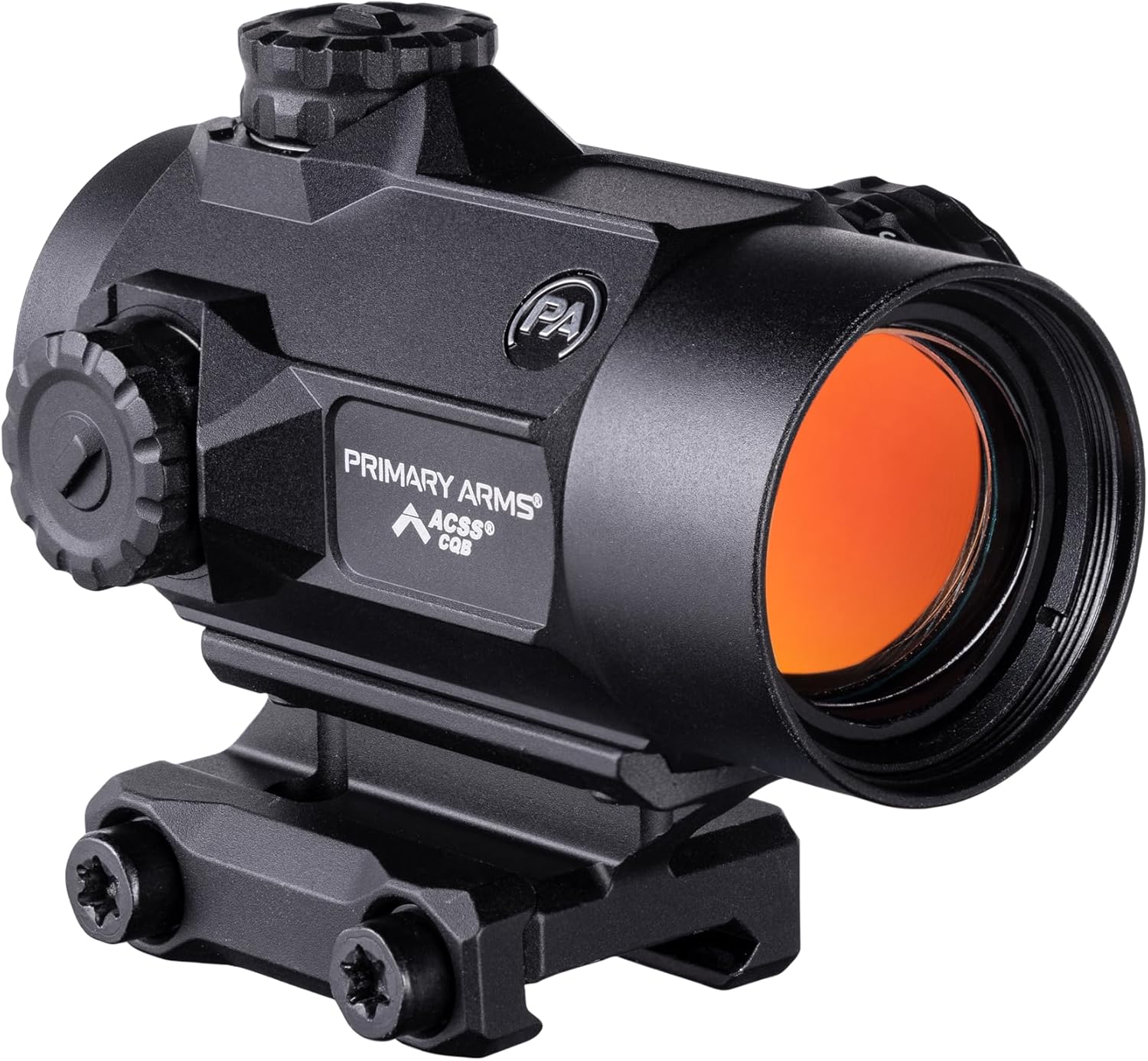
A rugged mid-size optic that bridges the gap between micro dots and full-size optics.
Specs:
- 2 MOA dot
- 50,000-hour battery life
- 25mm objective lens
- AutoLive motion sensing
Pros:
- Larger window than micro dots
- Durable housing
- Good battery life
- Clear glass
Cons:
- Slightly bulky
- Less refined controls than Aimpoint
My hands-on notes: Parallax is minimal, and the larger objective makes target acquisition faster. Co-witness height is ideal for lower 1/3 setups. Button feedback is firm and glove-friendly.
What people say online: Users like the balance between size and performance—often compared to Aimpoint at lower cost.
Mounting clarity: Includes riser for AR platforms.
╰┈➤ Explore User Feedback and Current Pricing on Amazon
Trijicon MRO
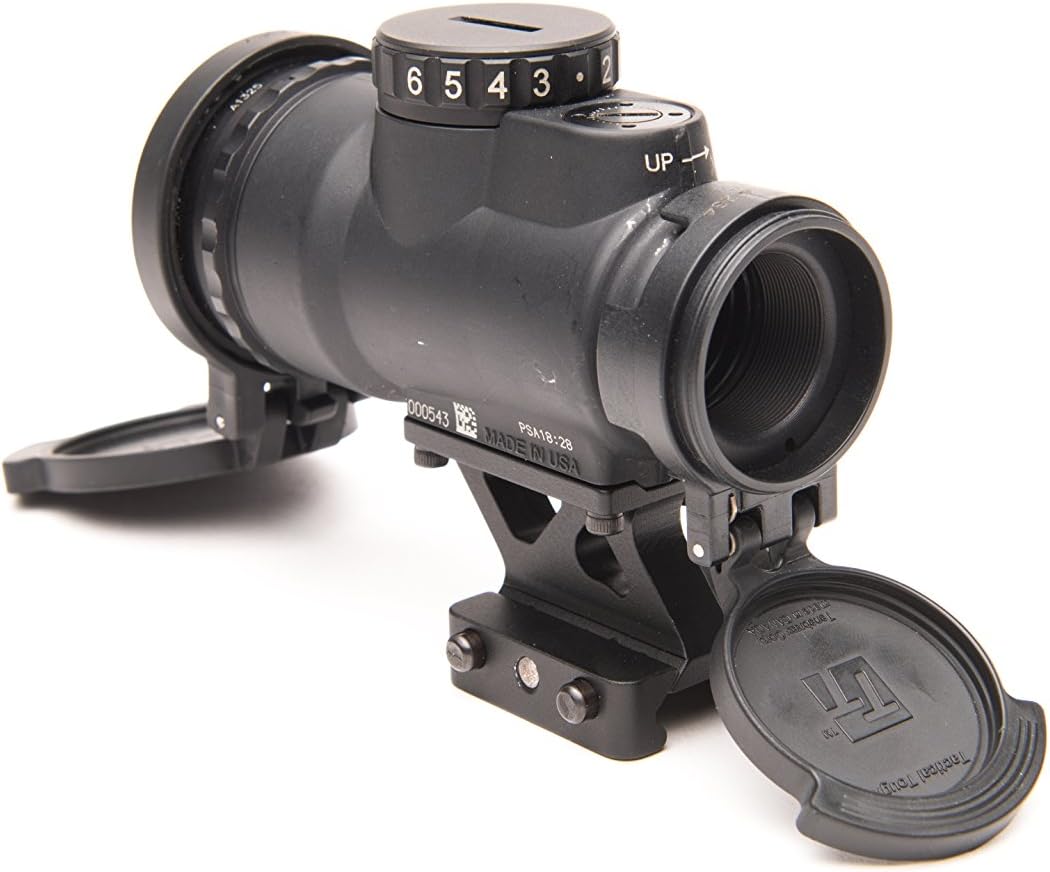
A premium optic known for its wide field of view and rugged construction.
Specs:
- 2 MOA dot
- 5-year battery life
- Fully sealed housing
- Large objective lens
Pros:
- Excellent durability
- Wide field of view
- Clear glass
- Strong recoil resistance
Cons:
- Slight magnification effect
- Higher price
My hands-on notes: Parallax is well-managed but not perfect at extreme edges. Co-witness depends on mount choice—most users prefer lower 1/3. The brightness dial is extremely tactile, even with gloves.
What people say online: Praised for ruggedness, though some mention slight optical distortion.
Mounting clarity: Requires separate mount depending on preferred height.
╰┈➤ Explore User Feedback and Current Pricing on Amazon
How I Tested / Evaluation Criteria
Parallax: I tested each optic by shifting head position while maintaining target alignment at 25 and 50 yards. The best optics minimized dot shift under rapid transitions, which is critical on a lightweight rifle like the Oracle.
Co-witness / deck height: I evaluated both absolute and lower 1/3 co-witness setups. The DPMS Oracle benefits from lower 1/3 for a clearer sight picture while retaining backup irons.
Durability: Each optic was assessed for recoil handling and housing integrity. Budget optics were especially scrutinized for zero retention after repeated firing cycles.
Battery: Battery life and accessibility matter. I prioritized optics with long runtime and easy-to-access compartments that don’t require re-zeroing.
Brightness range: From bright daylight to low-light shooting, I checked for bloom, flicker, and usable NV settings where applicable.
Glass quality: Lens clarity, tint, and distortion were evaluated. Budget optics often introduce blue tint or edge distortion.
Controls ergonomics: Button size, dial resistance, and usability with gloves were key factors—especially for real-world shooting conditions.
Mounting ecosystem: Compatibility with standard Picatinny rails was essential. I also considered availability of aftermarket mounts.
How to Choose the Right Red Dot for This Gun
Choosing the right optic for a DPMS Oracle is about understanding the rifle’s role. This isn’t a precision bench gun—it’s a practical AR platform meant for general-purpose shooting, training, and home defense.
First, consider size and weight. A heavy optic like the Aimpoint PRO adds durability but changes the rifle’s balance. Micro dots like the Romeo5 keep the rifle nimble and responsive, which is often preferable.
Next is battery life. If you want a “set-and-forget” optic, Aimpoint dominates. But newer budget optics have closed the gap significantly with motion activation and long standby times.
Mounting height is another critical factor. The Oracle’s flat-top receiver makes it easy to install optics, but choosing between absolute and lower 1/3 co-witness affects your shooting posture. I recommend lower 1/3 for most users—it keeps irons out of your primary sight picture.
Durability should match your use case. If you’re running drills or relying on the rifle for defense, invest in proven optics. If it’s a range gun, mid-tier options are more than sufficient.
Finally, glass quality and dot clarity matter more than specs. A crisp 2 MOA dot with minimal distortion will outperform a feature-packed optic with poor clarity.
FAQs
1. What mount height is best for DPMS Oracle? Lower 1/3 co-witness is ideal for most shooters.
2. Are cheap red dots reliable? Some are, especially from brands like Holosun and Sig Sauer.
3. Do I need night vision settings? Not unless you run NV gear—most users don’t need it.
4. Can I use a magnifier with these optics? Yes, especially with micro dots like Romeo5 and Aimpoint.
5. How often should I replace batteries? Annually for safety, even if rated for years.
Conclusion
Finding the Best Red Dot for Dpms Oracle comes down to matching your optic to your rifle’s purpose. Whether you prioritize affordability, durability, or premium performance, there’s a clear winner for your setup among these six options. The key is choosing an optic that enhances your shooting—not one that overcomplicates it.