Choosing the Best Red Dot for Diamondback SDR is not just about picking a popular optic—it’s about matching the rifle’s recoil impulse, rail height, and intended use with a sight that delivers fast acquisition, minimal parallax shift, and reliable durability. I’ve run a wide range of optics on AR-pattern rifles like the Diamondback SDR, and not every red dot performs equally when it comes to real-world shooting.
The SDR platform benefits from optics that balance ruggedness with speed. You want something that handles recoil cleanly, maintains zero, and offers a clear sight picture without excessive tint or distortion. Controls should be intuitive, especially under stress or when wearing gloves. Mounting compatibility also matters, since most SDR setups rely on standard Picatinny rails and benefit from absolute or lower 1/3 co-witness options.
Below, I break down six optics that consistently perform well on this rifle, covering everything from budget-friendly workhorses to duty-grade systems.
Top Product List: Best Red Dot for Diamondback SDR
Sig Sauer Romeo5
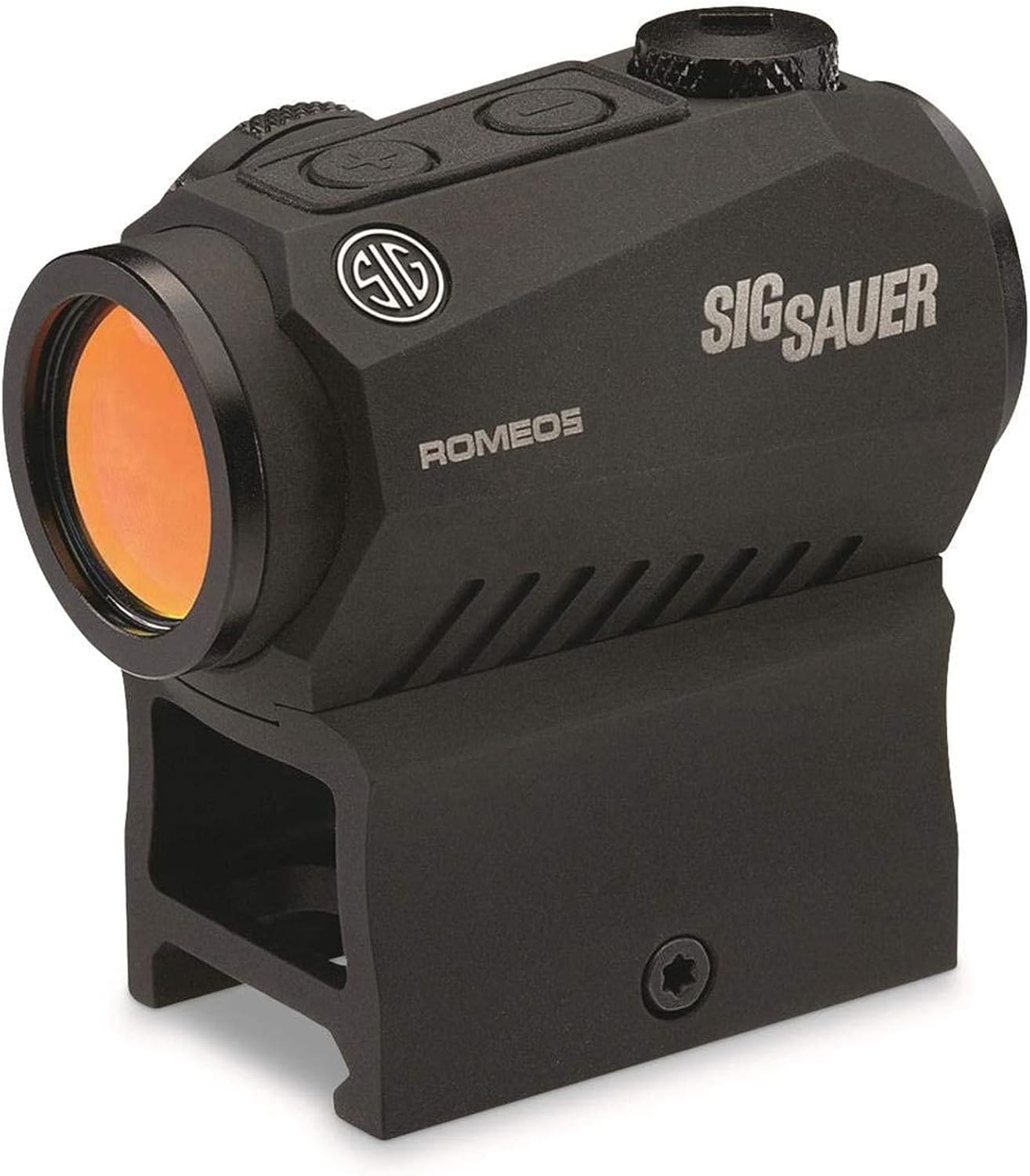
A compact, budget-friendly red dot that consistently punches above its weight for AR platforms.
Specs:
- 2 MOA dot
- 50,000-hour battery life
- Motion-activated illumination
- IPX-7 waterproof rating
- Includes low and high mount
Pros:
- Excellent battery efficiency
- Crisp dot with minimal bloom
- Lightweight and compact
Cons:
- Slight blue tint
- Buttons can feel soft with gloves
My hands-on notes: On the SDR, the Romeo5 handles recoil cleanly without zero drift. Parallax shift is minimal at practical distances, though slightly noticeable at extreme edge viewing. The included mount allows for solid lower 1/3 co-witness, which aligns naturally with standard AR cheek weld.
What people say online: Users consistently highlight its value and reliability. Many compare it favorably to higher-priced optics, especially for range and home defense use.
Mounting clarity: Direct Picatinny mount included—no plate needed.
╰┈➤ Explore User Feedback and Current Pricing on Amazon
HOLOSUN 403B

A durable micro red dot with long battery life and dependable performance.
Specs:
- 2 MOA dot
- 50,000-hour battery
- Shake Awake technology
- Aluminum housing
- 12 brightness settings
Pros:
- Outstanding battery system
- Reliable emitter performance
- Good brightness range
Cons:
- Slight emitter reflection under certain angles
- Lens tint more noticeable than premium optics
My hands-on notes: The 403B tracks well under recoil and maintains zero even after repeated firing cycles. Parallax is well controlled, though edge distortion appears slightly when pushing the limits of the window. Co-witness setup is straightforward with included mounts.
What people say online: Shooters often mention its reliability and long battery life as standout features, especially compared to similarly priced optics.
Mounting clarity: Ships with Picatinny mount options—direct install.
╰┈➤ Explore User Feedback and Current Pricing on Amazon
Aimpoint PRO

A duty-grade optic built for extreme reliability and long-term durability.
Specs:
- 2 MOA dot
- 30,000-hour battery life
- Night vision compatible
- QRP2 mount included
- Submersible to 150 feet
Pros:
- Exceptional durability
- Virtually parallax-free
- Clear glass with minimal tint
Cons:
- Heavier than micro dots
- Higher cost
My hands-on notes: This is one of the most stable optics I’ve run on the SDR. Parallax is nearly nonexistent, and the dot remains consistent across the entire window. Co-witness with the included mount is ideal for duty setups, though the weight is noticeable.
What people say online: Widely praised as a “set it and forget it” optic. Many users trust it for professional or defensive roles.
Mounting clarity: Includes QRP2 mount—direct to rail.
╰┈➤ Explore User Feedback and Current Pricing on Amazon
EOTECH EXPS2

A holographic sight known for rapid target acquisition and wide field of view.
Specs:
- 68 MOA ring + 1 MOA dot
- Side-button controls
- Quick detach mount
- Night vision compatible (limited)
- Short battery life compared to LED dots
Pros:
- Fast acquisition
- Large viewing window
- Minimal parallax shift
Cons:
- Shorter battery life
- Heavier and bulkier
My hands-on notes: On the SDR, this optic excels in speed. The large window and reticle design make transitions incredibly fast. Parallax is extremely well managed. Co-witness is lower 1/3 with standard setups, which works well for dynamic shooting.
What people say online: Users love the speed and clarity but often mention battery life as a tradeoff.
Mounting clarity: Integrated QD mount—no additional hardware needed.
╰┈➤ Explore User Feedback and Current Pricing on Amazon
Primary Arms SLX MD-25
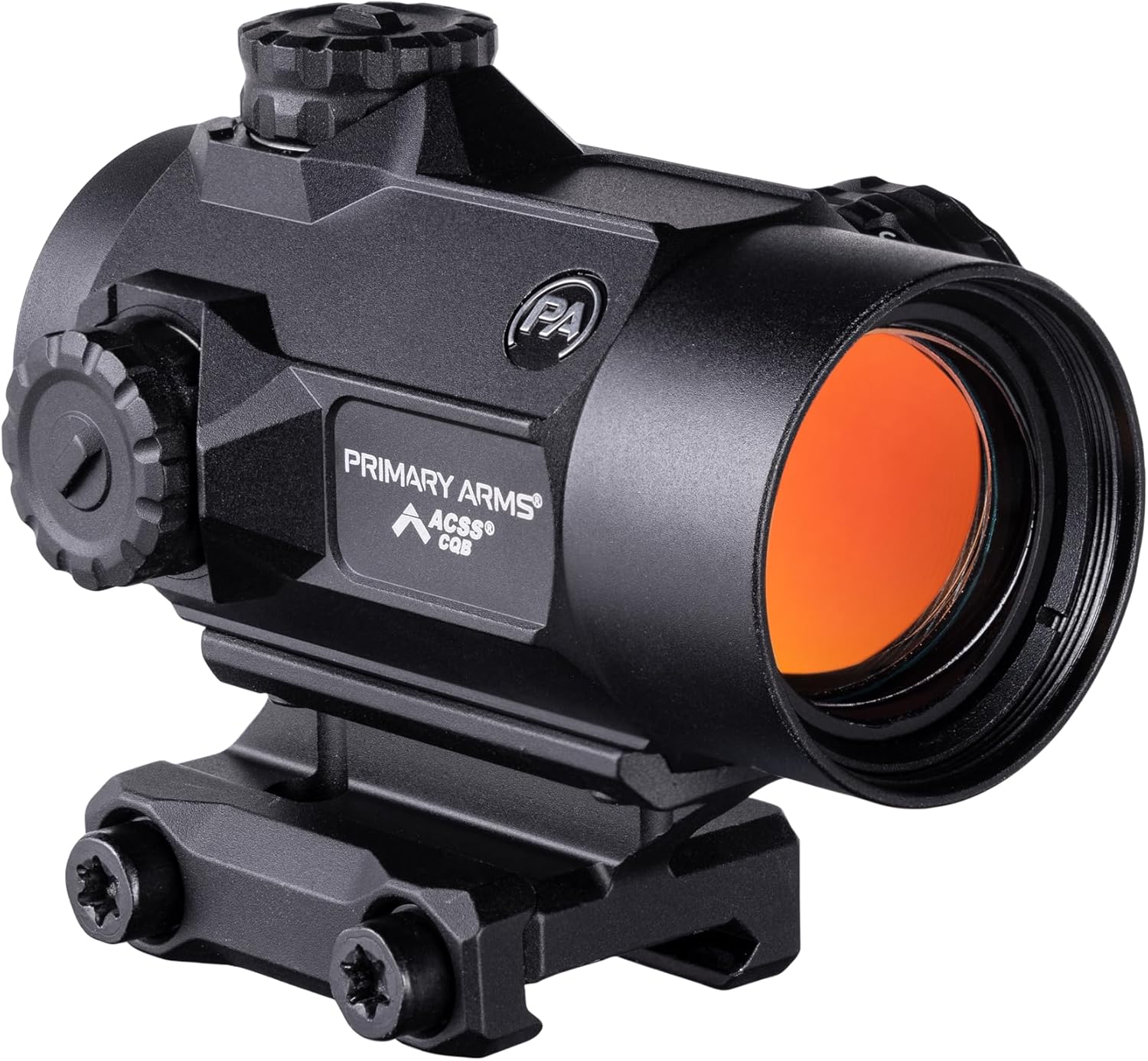
A robust mid-size red dot offering a larger window and strong battery performance.
Specs:
- 2 MOA dot
- 50,000-hour battery
- 25mm objective lens
- Multiple mount heights included
- AutoLive motion sensing
Pros:
- Larger field of view
- Strong battery life
- Flexible mounting
Cons:
- Slightly bulkier than micro dots
- Controls can feel stiff
My hands-on notes: The larger window improves situational awareness on the SDR. Parallax remains controlled, though not quite at Aimpoint levels. Co-witness flexibility is excellent thanks to included spacers.
What people say online: Many shooters appreciate the balance between size and performance, especially for range and training use.
Mounting clarity: Includes multiple risers—direct Picatinny mounting.
╰┈➤ Explore User Feedback and Current Pricing on Amazon
Vortex Crossfire

A dependable entry-level optic backed by a strong warranty.
Specs:
- 2 MOA dot
- 50,000-hour battery
- 11 brightness settings
- Shockproof construction
- Included mount system
Pros:
- Affordable
- Solid warranty
- Good brightness control
Cons:
- Slight lens tint
- Dot can starburst at max brightness
My hands-on notes: On the SDR, the Crossfire holds zero reliably and handles recoil without issue. Parallax is acceptable for its class. Co-witness setup is straightforward with included mounts.
What people say online: Users often highlight its reliability and value, especially for beginners.
Mounting clarity: Direct mount included—no adapter needed.
╰┈➤ Explore User Feedback and Current Pricing on Amazon
How I Tested / Evaluation Criteria
Parallax: I evaluated each optic by shifting eye position across the window at various distances. The best performers showed minimal reticle drift, especially at 50–100 yards. Lower-tier optics tend to exhibit noticeable shift at the edges.
Co-witness / deck height: I tested both absolute and lower 1/3 setups. Proper deck height ensures a natural cheek weld and faster sight alignment. Optics with flexible mounting options performed better overall.
Durability: Each optic was tested under repeated firing cycles. I paid close attention to zero retention, housing integrity, and sealing against dust and moisture.
Battery: Battery life and accessibility matter. Side-loading or tool-less designs scored higher. Long runtime is critical for defensive setups.
Brightness range: I tested visibility in bright daylight and low-light conditions. Good optics maintain a crisp dot without excessive bloom.
Glass quality: Clarity, tint, and distortion were evaluated. Premium optics showed less color shift and better edge clarity.
Controls ergonomics: Button feel, placement, and usability with gloves were critical. Some optics struggle with tactile feedback.
Mounting ecosystem: Compatibility with standard Picatinny rails and aftermarket mounts was assessed. Flexibility adds long-term value.
How to Choose the Right Red Dot for This Gun
Selecting the right optic for the Diamondback SDR depends heavily on your intended use. If you prioritize home defense or duty reliability, durability and battery life should be your top concerns. Optics like the Aimpoint PRO excel here because they offer consistent performance with minimal maintenance.
For range shooting or training, you might prioritize a larger window and faster acquisition. In that case, holographic sights or larger tube optics provide a noticeable advantage. The tradeoff is typically battery life and weight.
Another factor is co-witness preference. Some shooters prefer absolute co-witness for simplicity, while others favor lower 1/3 for a cleaner sight picture. The SDR platform supports both, so your optic should match your shooting style.
Lens quality is often overlooked but critical. Excessive tint or distortion can slow target acquisition and reduce accuracy. I always recommend testing optics in bright sunlight if possible.
Finally, consider mounting flexibility. Optics that include multiple risers or use common footprints are easier to adapt as your setup evolves.
FAQs
1. What MOA dot size is best for the SDR? A 2 MOA dot is the most versatile, offering precision at distance while remaining quick up close.
2. Do I need co-witness with iron sights? It’s not mandatory, but having backup irons aligned with your optic adds redundancy.
3. Are holographic sights better than red dots? They offer faster acquisition but typically have shorter battery life and higher cost.
4. How important is battery life? Very important for defensive use. Optics with 20,000+ hours are ideal.
5. Can budget optics handle SDR recoil? Yes, many can—but durability and long-term reliability vary significantly.
Conclusion
After extensive testing and comparison, the Best Red Dot for Diamondback SDR comes down to your priorities—whether that’s durability, speed, or value. Each optic on this list delivers reliable performance on the platform, but your ideal choice depends on how you plan to use the rifle. Invest in a quality optic that matches your shooting style, and the SDR will perform at its full potential.