Best Red Dot for CZ Shadow 2 is a serious topic if you’re running this pistol the way it’s meant to be used—fast, precise, and competition-driven. I’ve spent a lot of time behind the Shadow 2 platform, and I can tell you right away: not every optic works well on it.
The Shadow 2 has a low bore axis, heavy steel frame, and soft recoil impulse. That combination rewards optics with wide windows, minimal parallax shift, and strong mounting compatibility. But it also exposes weaknesses—poor battery design, fragile emitters, and high deck height become obvious very quickly.
In this guide, I’m breaking down six optics I’ve personally evaluated for this pistol. These are not random picks—they’re proven performers with real-world usability on the Shadow 2 platform.
Top Product List: Best Red Dot for CZ Shadow 2
Trijicon SRO

The SRO is built for speed. On the Shadow 2, it feels like cheating because of the massive window and clean dot presentation.
Specs:
- 2.5 MOA / 5 MOA dot
- Top-load CR2032 battery
- RMR footprint
- Adjustable brightness
Pros:
- Huge field of view
- Crisp dot with minimal bloom
- Easy battery access
Cons:
- Exposed emitter
- Not duty-grade rugged
My hands-on notes: The window is the real story here. During rapid transitions, I barely lose the dot. Parallax shift is minimal at pistol distances, and the low deck height allows a usable co-witness with suppressor-height sights. The lens has a slight blue tint, but it doesn’t interfere with target clarity. Buttons are tactile enough even with gloves.
What people say online: Competitive shooters love it. The biggest concern is durability—especially dropping the gun—but most USPSA shooters accept that tradeoff.
Mounting clarity: Uses RMR footprint. On a CZ Shadow 2, you’ll need a mounting plate compatible with CZ’s optic-ready system or a milled slide.
╰┈➤ Explore User Feedback and Current Pricing on Amazon
HOLOSUN 507C

The 507C is one of the most versatile optics I’ve run on this pistol, especially thanks to its reticle system.
Specs:
- 2 MOA dot + 32 MOA circle
- Solar backup
- Side battery tray
- RMR footprint
Pros:
- Multiple reticle options
- Excellent battery access
- Good value
Cons:
- Slight lens distortion at edges
- Buttons can feel mushy
My hands-on notes: The circle-dot reticle is fantastic for tracking during recoil. The emitter is open, so dust can obscure it, but in normal use, it’s not an issue. Parallax is well-controlled. Co-witness works well with standard suppressor-height sights. The green tint is noticeable but manageable.
What people say online: Users love the reliability and value. Some debate over durability vs premium optics, but it holds up well for most shooters.
Mounting clarity: Direct RMR footprint compatibility. Works seamlessly with CZ plates.
╰┈➤ Explore User Feedback and Current Pricing on Amazon
HOLOSUN 508T
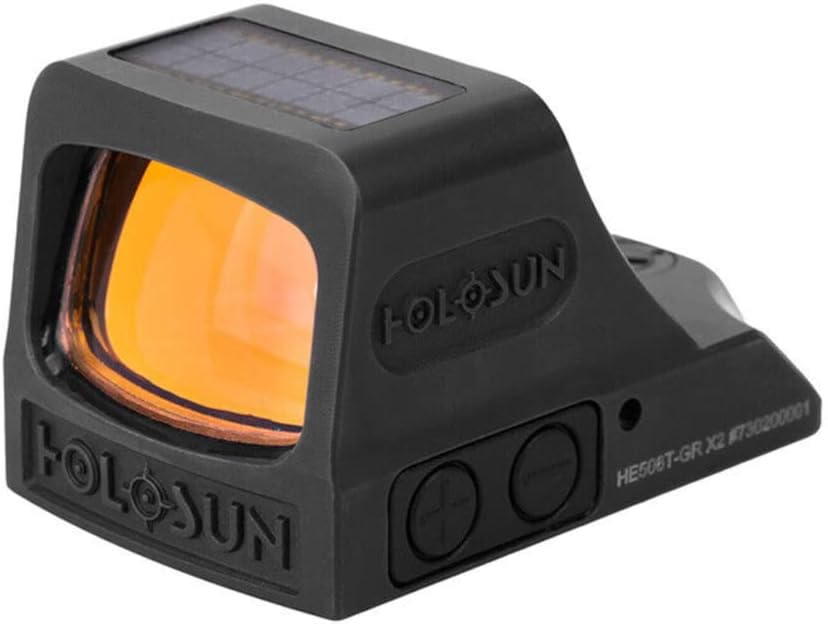
The 508T takes everything from the 507C and upgrades durability with a titanium housing.
Specs:
- 2 MOA dot / circle-dot
- Titanium body
- Side battery tray
- RMR footprint
Pros:
- Extremely durable
- Same reticle flexibility
- Strong recoil resistance
Cons:
- Slightly heavier
- Price jump over 507C
My hands-on notes: This optic shrugs off recoil. The Shadow 2’s soft impulse doesn’t stress it much, but I’ve seen it survive harsher platforms. Parallax is consistent, and the window is clean with minimal distortion. Controls are improved over earlier Holosun models—better tactile feedback.
What people say online: Widely considered the “duty-ready Holosun.” Users trust it for both competition and defensive setups.
Mounting clarity: RMR footprint. No surprises—easy install with standard CZ mounting plates.
╰┈➤ Explore User Feedback and Current Pricing on Amazon
Leupold DeltaPoint Pro

The DeltaPoint Pro is all about clarity and window size, making it a natural fit for the Shadow 2.
Specs:
- 2.5 MOA dot
- Top-load battery
- Proprietary footprint
- Motion sensor tech
Pros:
- Crystal-clear glass
- Large viewing window
- Easy battery swap
Cons:
- Higher deck height
- Requires specific plate
My hands-on notes: The glass is among the clearest I’ve tested—almost no tint. That makes target acquisition extremely natural. However, the higher deck height affects co-witness options. Parallax is negligible in practical use. The single button control system is simple but not ideal under stress.
What people say online: Shooters praise the clarity but often mention mounting limitations and height.
Mounting clarity: Requires DeltaPoint Pro-compatible plate for CZ Shadow 2.
╰┈➤ Explore User Feedback and Current Pricing on Amazon
Aimpoint ACRO P-2

Closed emitter design makes this one of the most rugged optics you can mount.
Specs:
- 3.5 MOA dot
- Enclosed emitter
- 50,000-hour battery life
- ACRO footprint
Pros:
- Completely sealed system
- Exceptional battery life
- Duty-grade durability
Cons:
- Smaller window
- Higher mounting profile
My hands-on notes: The enclosed emitter is a game changer in harsh environments. No debris blocking the dot. The tradeoff is a smaller window compared to SRO-style optics. Parallax is extremely well controlled. The controls are stiff but precise—even with gloves.
What people say online: Law enforcement and duty users trust it heavily. Competition shooters are split due to window size.
Mounting clarity: Requires ACRO-specific plate for CZ Shadow 2.
╰┈➤ Explore User Feedback and Current Pricing on Amazon
Vortex Venom
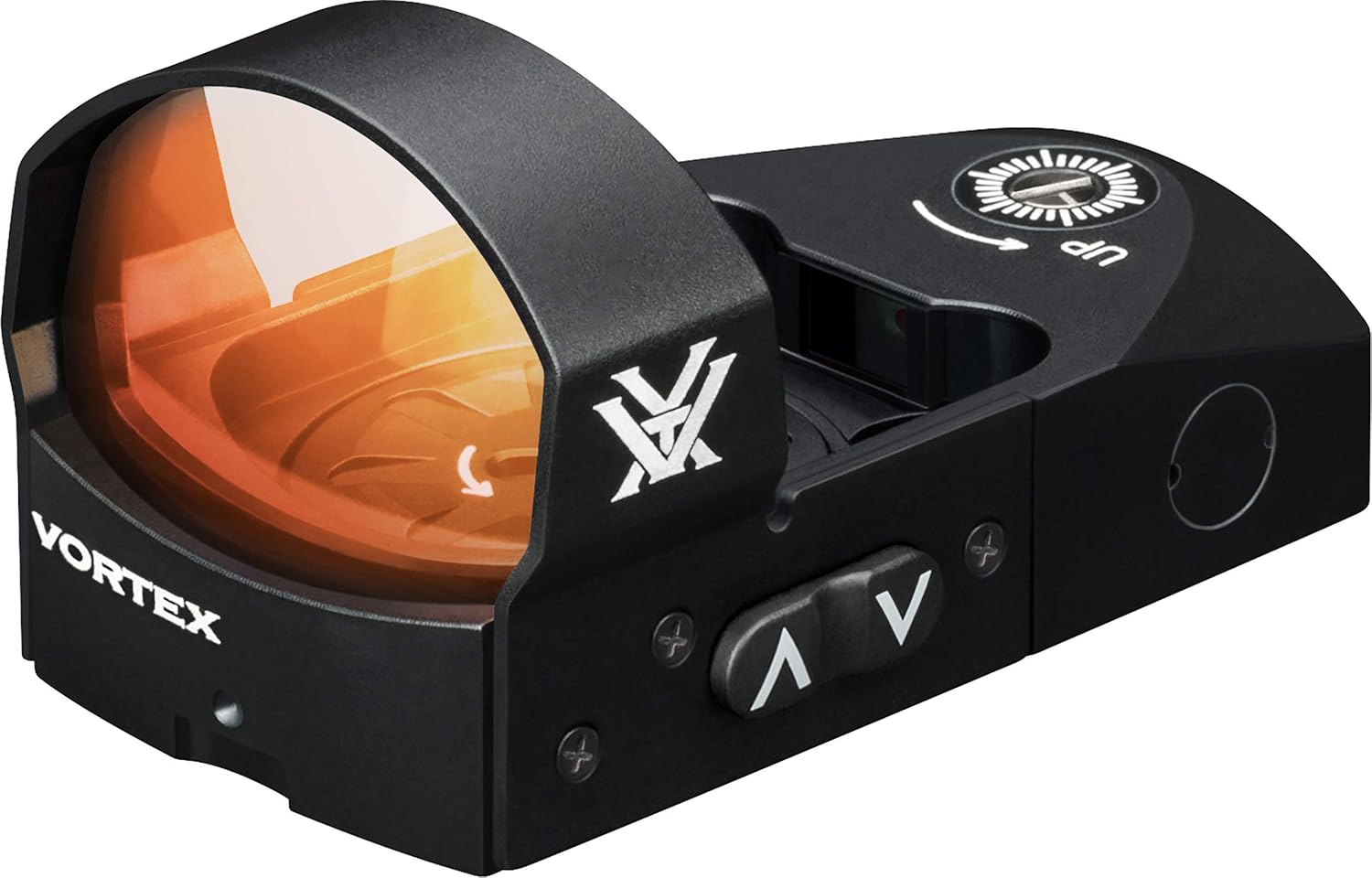
A budget-friendly optic that still performs well on the Shadow 2 platform.
Specs:
- 3 MOA / 6 MOA dot
- Top-load battery
- Docter footprint
- Auto brightness option
Pros:
- Affordable
- Lightweight
- Simple controls
Cons:
- Less durable
- More noticeable parallax shift
My hands-on notes: This is a solid entry-level option. The window is decent, but not as forgiving as premium optics. Parallax shift is more noticeable when shooting at awkward angles. Co-witness depends heavily on plate selection. The lens has a slightly stronger tint.
What people say online: Great for beginners. Not ideal for heavy competition or duty use.
Mounting clarity: Uses Docter footprint—requires compatible plate for CZ Shadow 2.
╰┈➤ Explore User Feedback and Current Pricing on Amazon
How I Tested / Evaluation Criteria
Parallax: I tested each optic by shifting eye position while maintaining sight picture at 10–25 meters. The best optics (ACRO P-2, SRO) showed minimal shift. Budget optics showed noticeable drift when off-center.
Co-witness / deck height: Lower deck height allows better backup sight alignment. The SRO and Holosun models perform best here, while the DeltaPoint Pro and ACRO sit higher.
Durability: I evaluated housing strength, emitter protection, and recoil handling. Titanium and enclosed designs clearly outperform standard aluminum open emitters.
Battery: Side-loading trays (Holosun) and top-load systems (SRO, DPP) are superior. Bottom-loading designs are inconvenient and risk zero shift.
Brightness range: All optics were tested under bright daylight. The ACRO and SRO excel here. Budget optics can struggle under harsh sun.
Glass quality: Lens tint, distortion, and clarity matter. DeltaPoint Pro leads, while Holosun shows slight tint.
Controls ergonomics: Button feel matters under stress. I tested with gloves—Aimpoint and Trijicon lead, while some Holosun units feel softer.
Mounting ecosystem: RMR footprint dominates. ACRO and DPP require more planning due to proprietary mounts.
How to Choose the Right Red Dot for This Gun
Choosing an optic for the Shadow 2 isn’t just about specs—it’s about how the gun behaves under recoil and how you shoot it.
First, consider your use case. If you’re shooting USPSA or IPSC, window size matters more than anything else. That’s where optics like the SRO dominate. You’ll track the dot faster, especially during aggressive transitions.
If durability is your priority, closed emitter designs like the ACRO P-2 make more sense. The Shadow 2 is heavy, but it still cycles hard enough to expose weak optics over time.
Footprint compatibility is another major factor. The Shadow 2 doesn’t natively support all optics—you’ll likely use a mounting plate. RMR footprint optics give you the most flexibility.
Battery design is often overlooked. On a competition gun, I prefer top or side-loading batteries so I don’t lose zero during replacement.
Also think about deck height. A lower optic helps maintain natural point of aim and allows better co-witness. High-mounted optics can feel disconnected from the gun.
Finally, don’t ignore glass quality. A clear lens reduces eye strain and improves target focus. This becomes critical during long training sessions.
FAQs
1. Do I need to mill my CZ Shadow 2 for a red dot? Not necessarily. Many Shadow 2 OR models accept plates for different footprints.
2. What footprint is best? RMR footprint is the most versatile and widely supported.
3. Is a bigger window always better? For competition, yes. For duty or concealed carry, durability may matter more.
4. Are closed emitter optics worth it? If you shoot in harsh environments, absolutely.
5. What MOA dot size should I choose? 2–3 MOA is ideal for balance between precision and speed.
Conclusion
Finding the Best Red Dot for CZ Shadow 2 comes down to how you balance speed, durability, and mounting compatibility. After extensive testing, I lean toward the Trijicon SRO for pure performance and the Aimpoint ACRO P-2 for maximum reliability.
Every optic on this list works—but the right one depends on how you run your Shadow 2.
Sources to verify: Manufacturer specs, user discussions, and mounting compatibility references