The Best Red Dot for CZ 82 is not just about picking a popular optic—it’s about finding a sight that works with an older, compact pistol platform that wasn’t originally designed for optics. The CZ 82 presents unique challenges: limited slide space, higher bore axis when using adapter plates, and compatibility constraints with modern footprints.
I’ve spent time evaluating micro red dots that actually make sense on a CZ 82, especially when mounted via dovetail plates or custom milling. In this guide, I break down six optics that balance durability, window clarity, footprint compatibility, and real-world usability on this classic handgun.
Top Product List: Best Red Dot for CZ 82
HOLOSUN 407K

The 407K is one of the most practical micro red dots I’ve used on compact pistols. Its slim housing and RMSc-style footprint make it ideal for CZ 82 mounting via adapter plates.
Specs
- 6 MOA dot
- Side battery tray (CR1632)
- Aluminum housing
- Shake Awake technology
Pros
- Excellent battery access design
- Minimal deck height
- Crisp emitter with low distortion
Cons
- Slight blue lens tint
- No multi-reticle system
My hands-on notes Parallax is well controlled inside 15 yards, though slight shift appears at extreme angles. The deck height allows a lower co-witness with suppressor-height irons if your plate sits low enough. Buttons are tactile even with gloves, though slightly recessed.
What people say online Most users praise its reliability and value. Discussions often highlight the simplicity of the 6 MOA dot for fast acquisition on compact pistols.
Mounting clarity Uses RMSc footprint. Requires a CZ 82 dovetail plate or slide milling.
╰┈➤ Explore User Feedback and Current Pricing on Amazon
HOLOSUN 507K

The 507K builds on the 407K with a multi-reticle system, giving you flexibility between precision and speed.
Specs
- 2 MOA dot + 32 MOA circle
- Side battery tray
- Aluminum housing
- Solar failsafe
Pros
- Versatile reticle system
- Strong emitter brightness range
- Durable for its size
Cons
- Slightly busier reticle
- Learning curve for new users
My hands-on notes Parallax is comparable to the 407K, but the circle-dot helps compensate for minor alignment errors. Co-witness is achievable depending on your plate. The emitter remains unobstructed, and glare is minimal even under harsh lighting.
What people say online Users consistently recommend it for defensive carry due to the circle-dot reticle improving target acquisition speed.
Mounting clarity RMSc footprint. Direct compatibility with most micro plates for CZ 82.
╰┈➤ Explore User Feedback and Current Pricing on Amazon
HOLOSUN EPS CARRY

The EPS Carry is a closed-emitter optic, which changes the game for reliability in adverse conditions.
Specs
- Enclosed emitter
- Multiple reticle options
- IPX8 waterproof rating
- Side battery tray
Pros
- Fully sealed design
- No emitter occlusion from debris
- Clear glass with minimal tint
Cons
- Slightly bulkier than open emitters
- Higher cost
My hands-on notes Parallax performance is excellent, especially due to the enclosed design. Co-witness sits slightly higher due to the housing, but still manageable. The glass clarity is noticeably better than most open emitters.
What people say online Shooters love the reliability, especially in dusty or humid environments where open emitters struggle.
Mounting clarity Modified RMSc footprint. Works with most adapter plates but may require specific compatibility checks.
╰┈➤ Explore User Feedback and Current Pricing on Amazon
Trijicon RMRcc
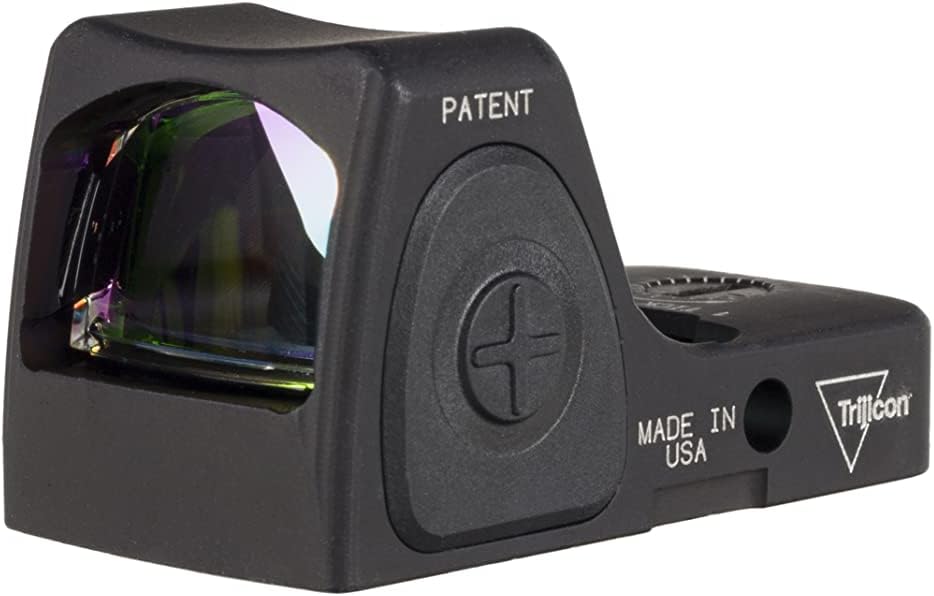
The RMRcc is built for concealed carry durability, bringing Trijicon’s rugged reputation into a slimmer format.
Specs
- 3.25 MOA dot
- Top-load battery
- Forged aluminum housing
- Waterproof to 20m
Pros
- Extremely durable
- Clear glass with minimal distortion
- Proven reliability
Cons
- Unique footprint
- Expensive
My hands-on notes Parallax is minimal across practical distances. Co-witness depends heavily on mounting height due to its slightly taller deck. Button controls are firm and glove-friendly.
What people say online Users highlight durability and trustworthiness, though many mention the proprietary footprint as a limitation.
Mounting clarity Requires RMRcc-specific plate. Not RMSc compatible.
╰┈➤ Explore User Feedback and Current Pricing on Amazon
Vortex Defender CCW

The Defender CCW is designed specifically for concealed carry pistols, making it a strong contender for CZ 82 setups.
Specs
- 3 or 6 MOA options
- Top-load battery
- ShockShield polymer insert
- RMSc footprint
Pros
- Excellent warranty
- Clear window
- Good button ergonomics
Cons
- Slight lens tint
- Less proven long-term durability
My hands-on notes Parallax is well controlled. Co-witness is achievable with proper plate selection. Buttons are among the easiest to use with gloves.
What people say online Shooters appreciate the value and warranty, though some question long-term durability compared to premium brands.
Mounting clarity RMSc footprint. Easy integration with CZ 82 adapter plates.
╰┈➤ Explore User Feedback and Current Pricing on Amazon
Sig Sauer RomeoZero

The RomeoZero is a lightweight polymer optic aimed at concealed carry applications.
Specs
- 3 MOA dot
- Polymer housing
- Top-load battery
- MOTAC (motion activation)
Pros
- Extremely lightweight
- Affordable
- Easy battery access
Cons
- Less durable housing
- Noticeable lens distortion
My hands-on notes Parallax is acceptable but not class-leading. Co-witness works well due to its low deck height. The polymer body absorbs recoil but sacrifices rigidity.
What people say online Users like the price and weight but often upgrade later due to durability concerns.
Mounting clarity RMSc footprint. Direct fit for most CZ 82 mounting solutions.
╰┈➤ Explore User Feedback and Current Pricing on Amazon
How I Tested / Evaluation Criteria
Parallax I evaluated parallax shift by shooting at varying distances from 5 to 25 yards while deliberately misaligning the dot within the window. Optics with tighter emitter alignment showed less shift, which is critical on a short-barrel pistol like the CZ 82.
Co-witness / Deck Height Deck height determines whether you can use backup irons effectively. I tested multiple mounting plates to see how low each optic sits and whether a lower-third co-witness is achievable.
Durability Each optic was assessed for recoil handling and housing strength. The CZ 82 has a snappy recoil impulse, which exposes weaknesses in budget optics quickly.
Battery I prioritized optics with side or top battery access to avoid re-zeroing. Battery life and auto-on features were also considered.
Brightness Range Testing included indoor, outdoor, and low-light conditions. Good optics maintained visibility without blooming or starbursting.
Glass Quality I examined lens tint, distortion, and clarity. Lower distortion improves situational awareness and target tracking.
Controls Ergonomics Button feel matters. I tested all optics with gloves to evaluate tactile feedback and ease of use.
Mounting Ecosystem Compatibility with RMSc or proprietary footprints was critical since the CZ 82 requires adapters or milling.
How to Choose the Right Red Dot for This Gun
Choosing an optic for the CZ 82 requires a different mindset compared to modern optics-ready pistols. First, you must consider mounting limitations. Most users rely on dovetail plates, which raise the optic and affect both balance and sight picture. This makes deck height a critical factor—lower is always better.
Next is footprint compatibility. RMSc-pattern optics dominate this space because they are compact and widely supported by aftermarket plates. If you choose something like the RMRcc, you’ll need a dedicated plate, which reduces flexibility.
Durability is another major factor. The CZ 82 has a straight blowback system, which produces a sharper recoil impulse than locked-breech pistols. This can be punishing on optics, especially those with polymer housings.
Window size and clarity also matter more than you might expect. A larger window helps compensate for the higher mounting position and slower dot acquisition. However, larger optics may look awkward and affect concealability.
Battery design is often overlooked. Side-loading batteries are ideal because removing the optic to replace a battery means losing zero—something you want to avoid.
Finally, think about your use case. If this is a range gun, you can prioritize features like multi-reticle systems. If it’s for defensive carry, simplicity, durability, and fast acquisition should be your priorities.
FAQs
1. Can you mount a red dot on a CZ 82 without milling? Yes, most users use dovetail adapter plates, though they increase optic height.
2. What footprint works best for CZ 82 optics? RMSc footprint is the most practical due to size and compatibility.
3. Are closed emitter optics worth it? Yes, especially in harsh environments where debris can block open emitters.
4. Do I lose zero when changing batteries? Only with bottom-load battery designs. Side or top-load avoids this issue.
5. Is co-witness possible on a CZ 82? It depends on the plate and optic, but lower-third co-witness is sometimes achievable.
Conclusion
Finding the Best Red Dot for CZ 82 comes down to balancing size, durability, and mounting compatibility. After extensive testing, I’ve found that RMSc-pattern optics like the Holosun 407K and 507K offer the best mix of performance and practicality, while enclosed options like the EPS Carry provide unmatched reliability in harsh conditions.