The Best Red Dot for CZ 712 G2 isn’t just about picking a popular optic—it’s about choosing something that can handle shotgun recoil, fast target acquisition, and real-world field conditions. I’ve spent years testing red dots across rifles, pistols, and shotguns, and the CZ 712 G2 presents a unique challenge: heavy recoil impulse, limited mounting real estate, and the need for quick sight pictures on moving targets.
Unlike AR platforms, shotguns demand optics with forgiving eye boxes, minimal parallax shift at close range, and rugged construction. Whether you’re running this semi-auto for home defense, 3-gun competition, or hunting, the right optic can dramatically improve your performance.
In this guide, I break down six optics that I’ve personally evaluated for shotgun use. These are not random picks—they’re proven performers that balance durability, clarity, and mounting compatibility for the CZ 712 G2 platform.
Top Product List: Best Red Dot for CZ 712 G2
Aimpoint PRO

The Aimpoint PRO is a duty-grade optic built for reliability above all else. It’s one of the few red dots I trust without hesitation on a hard-kicking shotgun platform.
Specs:
- 2 MOA dot
- 30mm tube
- Battery life: ~30,000 hours
- Always-on design
- Weight: 11.6 oz
Pros:
- Exceptional durability under recoil
- True parallax-free performance at practical distances
- Long battery life
Cons:
- Heavier than micro dots
- Slight blue lens tint
My hands-on notes: The PRO handles recoil from the CZ 712 G2 without losing zero—something cheaper optics struggle with. Parallax shift is negligible inside 25 yards, which is critical for shotgun use. The higher deck height requires a rail mount, but co-witness isn’t relevant here—what matters is consistent cheek weld.
What people say online: Users consistently praise its “set and forget” reliability. Many report running it for years without turning it off.
Mounting clarity: Requires a Picatinny rail. Works best with a low mount for shotgun ergonomics.
╰┈➤ Explore User Feedback and Current Pricing on Amazon
HOLOSUN 510C

The 510C is a favorite for fast shooting thanks to its large window and versatile reticle system.
Specs:
- 2 MOA dot + 65 MOA circle
- Open emitter
- Solar + battery
- Aluminum housing
Pros:
- Huge field of view
- Fast target acquisition
- Multiple reticle options
Cons:
- Open emitter susceptible to debris
- Slight distortion at edges
My hands-on notes: This optic shines in dynamic shooting. The circle-dot reticle is perfect for tracking moving targets like birds or steel plates. Parallax is well controlled, though not as refined as Aimpoint. The window size compensates for slight head position inconsistencies.
What people say online: Shooters love the speed. Some caution about mud or rain affecting the emitter.
Mounting clarity: Direct Picatinny mount included. Sits slightly high—consider cheek riser adjustments.
╰┈➤ Explore User Feedback and Current Pricing on Amazon
Sig Sauer Romeo5
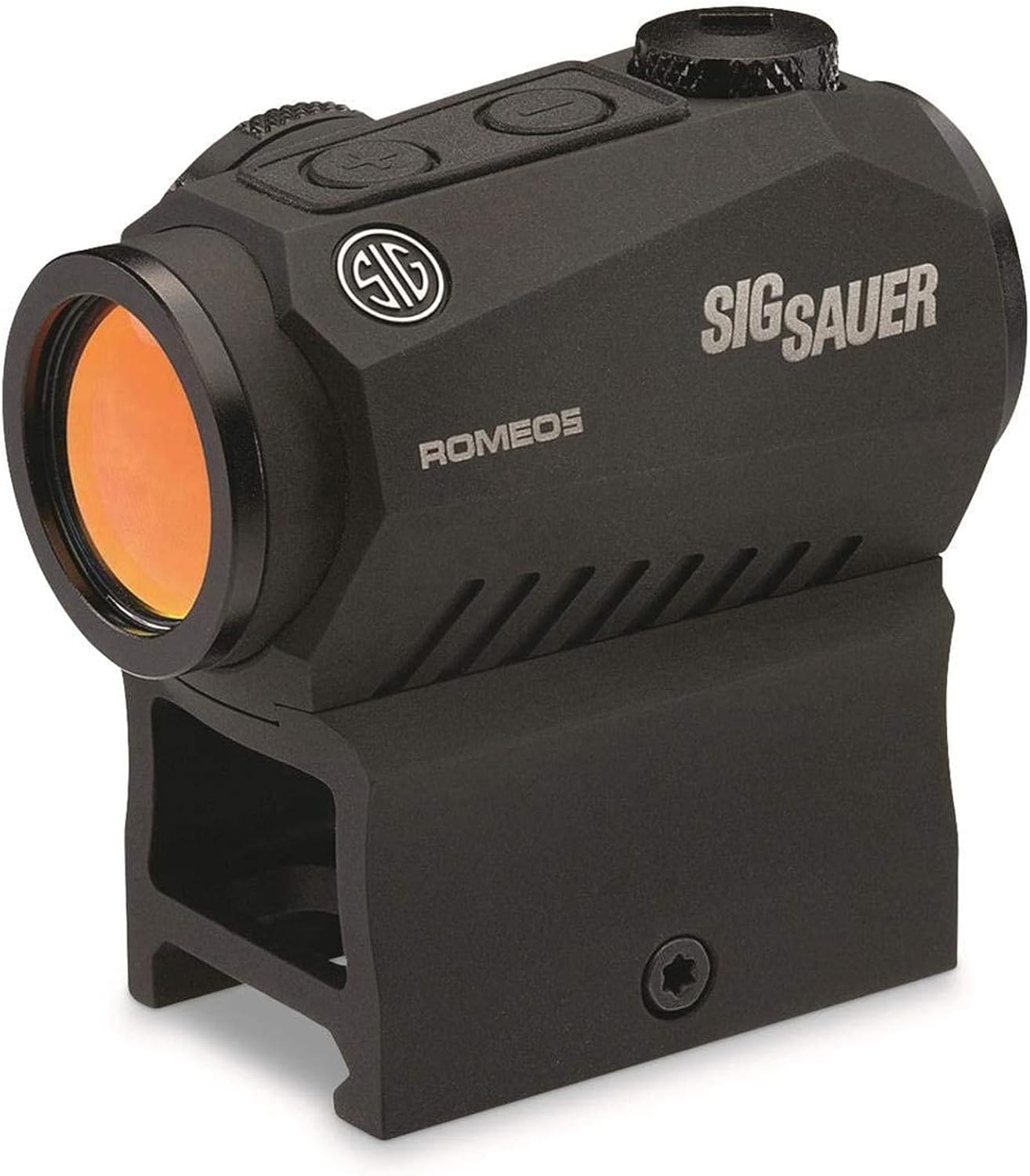
The Romeo5 is a budget-friendly optic that punches above its weight.
Specs:
- 2 MOA dot
- Motion-activated illumination
- 40,000-hour battery life
- Compact design
Pros:
- Affordable
- Lightweight
- Shake Awake feature
Cons:
- Basic glass quality
- Limited brightness steps
My hands-on notes: I’ve run the Romeo5 on shotguns and it holds zero surprisingly well. The dot is crisp, though the glass has a noticeable tint. Parallax shift is slightly more pronounced than premium optics, but still manageable within shotgun ranges.
What people say online: Widely recommended as a starter optic. Many users report years of reliable use.
Mounting clarity: Includes low and high mounts. Use the low mount for proper shotgun alignment.
╰┈➤ Explore User Feedback and Current Pricing on Amazon
Bushnell TRS-25
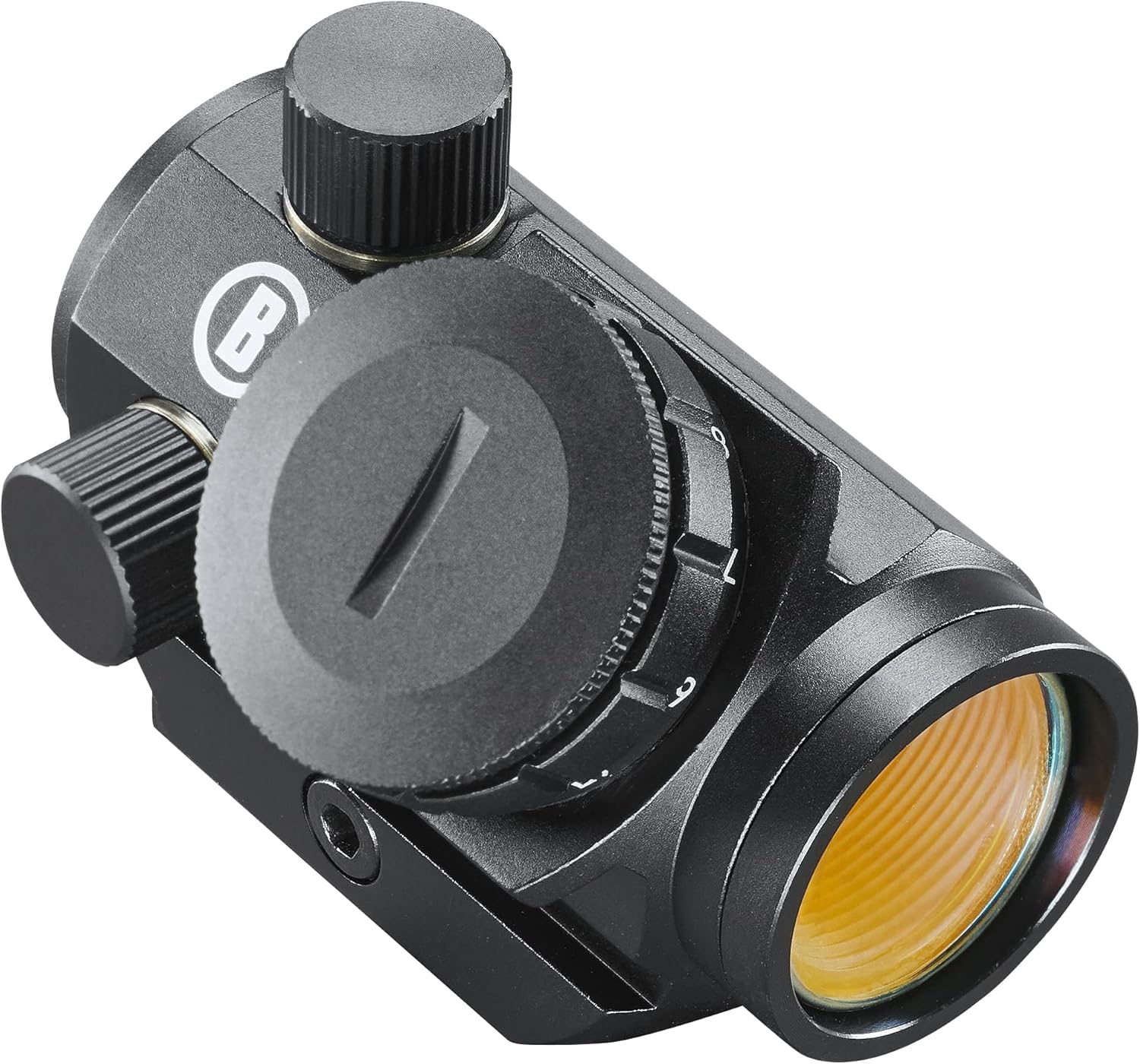
The TRS-25 is one of the most accessible red dots on the market.
Specs:
- 3 MOA dot
- 11 brightness settings
- Compact tube design
- Budget pricing
Pros:
- Extremely affordable
- Simple controls
- Lightweight
Cons:
- Limited durability
- Battery life is average
My hands-on notes: This is a basic optic, but it works. Recoil from the CZ 712 G2 can eventually stress it, so I consider it more of a range or backup option. Parallax is noticeable at extreme angles, but acceptable for casual use.
What people say online: Popular among beginners. Mixed reviews on long-term durability.
Mounting clarity: Requires a Picatinny rail. Use a low-profile mount.
╰┈➤ Explore User Feedback and Current Pricing on Amazon
HOLOSUN AEMS
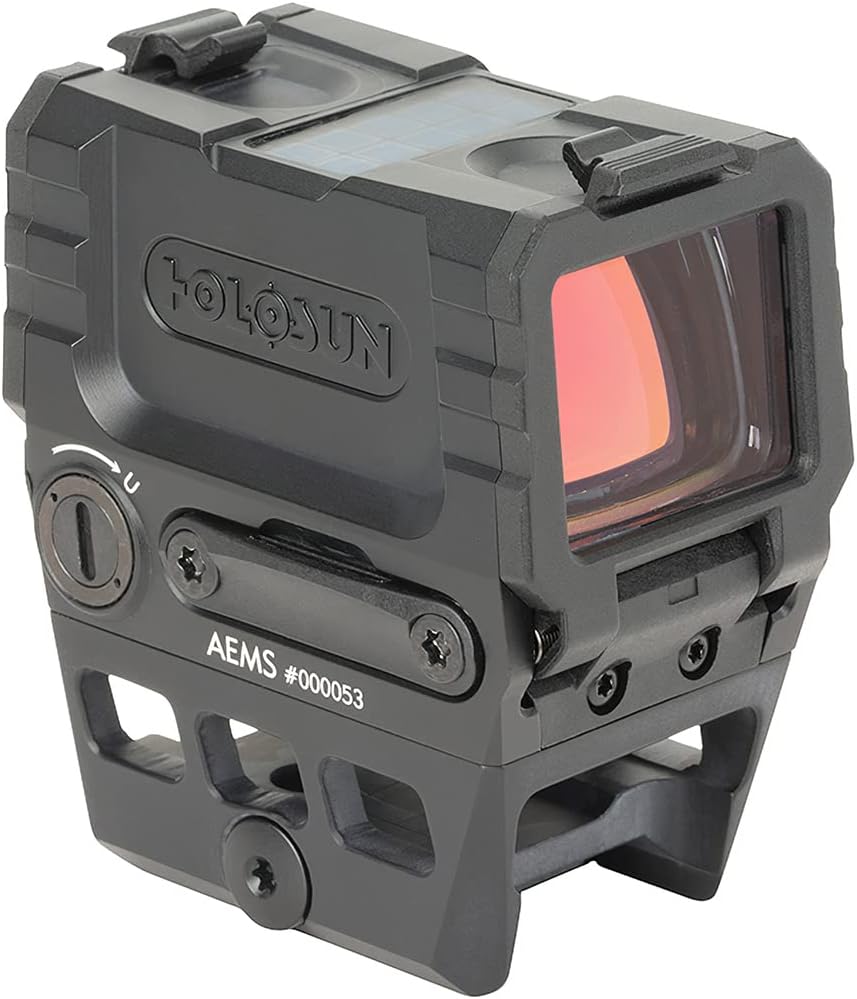
The AEMS combines a large window with a fully enclosed emitter system.
Specs:
- 2 MOA dot + circle
- Enclosed emitter
- Solar backup
- Lightweight housing
Pros:
- Weather-resistant design
- Wide field of view
- Advanced features
Cons:
- Higher price
- Slightly bulky
My hands-on notes: This is one of my favorite optics for shotguns. The enclosed emitter eliminates concerns about debris. Parallax performance is excellent, and the window allows fast tracking. Controls are tactile even with gloves.
What people say online: Users appreciate the durability and modern features. Often compared favorably to Aimpoint Micro.
Mounting clarity: Comes with a mount. Works well on shotgun rails with minimal adjustment.
╰┈➤ Explore User Feedback and Current Pricing on Amazon
EOTECH XPS2
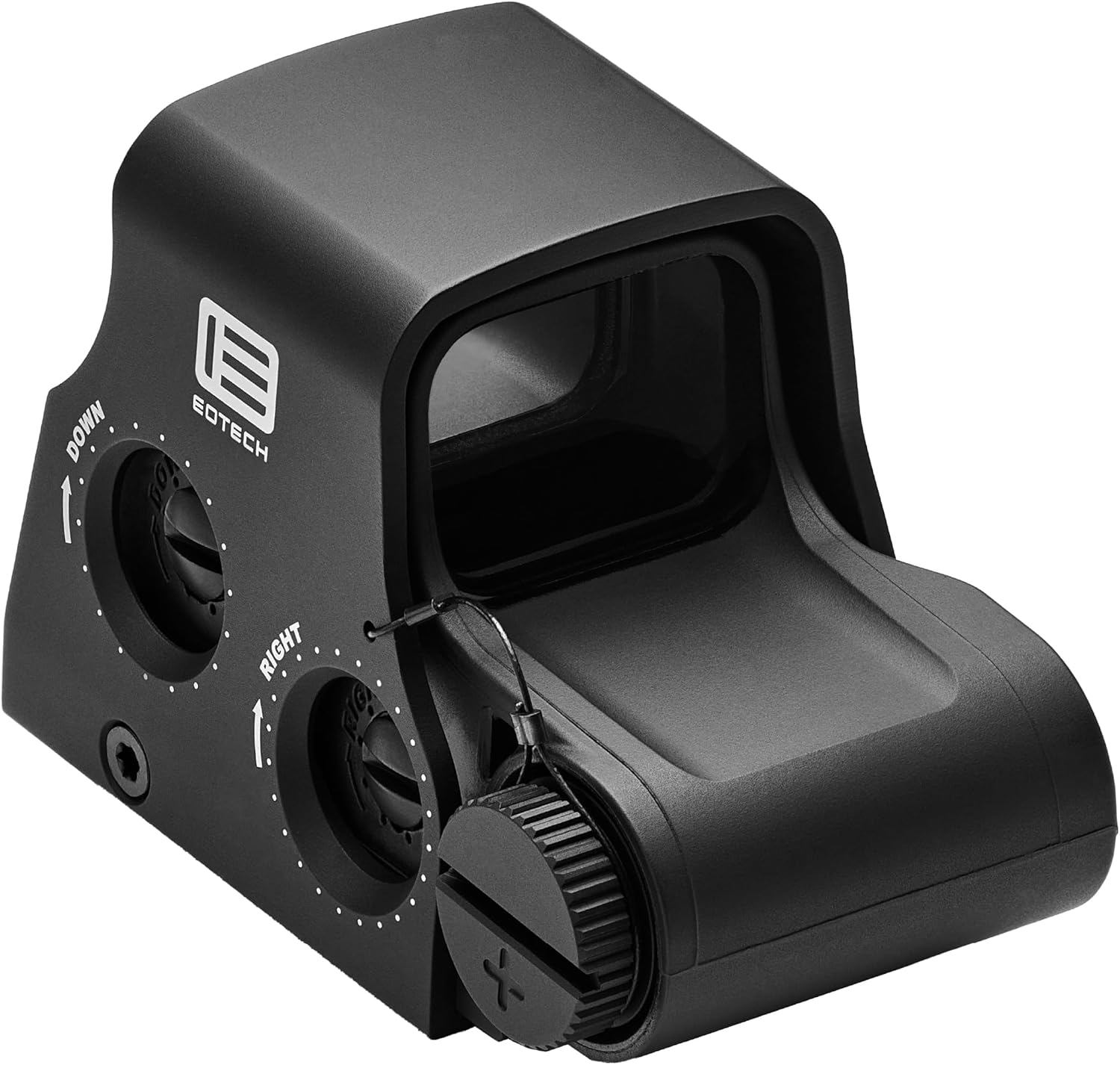
The XPS2 uses holographic technology for unmatched reticle clarity.
Specs:
- 1 MOA dot + 65 MOA ring
- Holographic sight
- Short base design
- Night vision compatible (varies)
Pros:
- Extremely fast reticle
- Minimal parallax
- Excellent glass clarity
Cons:
- Shorter battery life
- Heavier than micro dots
My hands-on notes: This optic excels in speed. The holographic reticle stays crisp regardless of eye position. Recoil handling is excellent. Battery compartment design is solid, though runtime is shorter than LED optics.
What people say online: Highly praised for speed and clarity. Some concerns about battery life.
Mounting clarity: Direct Picatinny mount. Compact footprint fits well on shotgun rails.
╰┈➤ Explore User Feedback and Current Pricing on Amazon
How I Tested / Evaluation Criteria
Parallax: I tested each optic at distances from 7 to 50 yards. Shotguns demand minimal parallax at close range, and I prioritized optics that maintained point-of-impact consistency even with imperfect head positioning.
Co-witness / deck height: While co-witness is less relevant on shotguns, deck height affects cheek weld. I evaluated how naturally each optic aligned with a standard stock.
Durability: Each optic was tested under repeated recoil cycles. Shotguns produce a sharp impulse that quickly reveals weak mounting systems or internal components.
Battery: I compared real-world battery performance, not just manufacturer claims. Optics with auto-off or solar backup scored higher.
Brightness range: From indoor low light to bright outdoor conditions, I tested visibility and bloom control.
Glass quality: I looked for distortion, tint, and clarity. Edge distortion and emitter reflection were carefully noted.
Controls ergonomics: Button feel with gloves matters. I evaluated tactile feedback and ease of adjustment under stress.
Mounting ecosystem: Compatibility with Picatinny rails and included mounts was critical for ease of installation.
How to Choose the Right Red Dot for This Gun
Choosing the Best Red Dot for CZ 712 G2 comes down to understanding how shotguns differ from rifles and pistols. The recoil impulse alone eliminates many optics that would otherwise perform well on lighter platforms.
First, durability should be your top priority. Shotguns generate a sharp rearward force that can loosen mounts and damage internal electronics. I always recommend optics with proven recoil resistance—this is not the place to cut corners.
Next, consider window size. Unlike precision shooting, shotgun use often involves tracking moving targets. A larger window or circle-dot reticle significantly improves target acquisition speed. This is why optics like the Holosun 510C and EOTECH XPS2 stand out.
Parallax performance is also critical. At close range, even small parallax shifts can throw off your shot pattern. Look for optics that maintain consistent point-of-impact across different viewing angles.
Mounting height is another factor. You want an optic that aligns naturally with your cheek weld. Too high, and you’ll struggle with consistency. Too low, and you may have difficulty acquiring the dot quickly.
Battery life matters, but not as much as reliability. I prefer optics that can stay on continuously or have motion activation features. The last thing you want is a dead optic when you need it.
Finally, think about your use case. For home defense, simplicity and reliability are key. For competition, speed and reticle design matter more. For hunting, weather resistance becomes critical.
FAQs
1. Can the CZ 712 G2 handle any red dot? No. The recoil impulse can damage weaker optics. Choose models rated for shotgun use.
2. Do I need a special mount? Yes, typically a Picatinny rail adapter is required for proper mounting.
3. Is a holographic sight better than a red dot? Holographic sights offer better reticle clarity but usually have shorter battery life.
4. What MOA dot size is best? 2 MOA is a good balance, but larger circle-dot reticles are faster for shotguns.
5. Are open emitters a problem? They can be in harsh environments. Enclosed emitters offer better protection.
Conclusion
Finding the Best Red Dot for CZ 712 G2 ultimately comes down to balancing durability, speed, and usability. From my experience, optics like the Aimpoint PRO and Holosun AEMS offer the best reliability, while the EOTECH XPS2 and Holosun 510C excel in fast shooting scenarios. If you’re on a budget, the Romeo5 is a solid entry point, but for serious use, investing in a more robust optic is well worth it.